
Ethereum: Understanding the Difference Between ASIC and FPGA for Cryptocurrency Mining
As a software enthusiast with limited technical knowledge of hardware, it can be difficult to navigate the world of computer hardware and its various applications, especially when it comes to cryptocurrency mining. Two popular components that often come into play are application-specific integrated circuits (ASICs) and field-programmable gate arrays (FPGAs). Both have their strengths and weaknesses, which we’ll explore below.
What is an ASIC?
An application-specific integrated circuit (ASIC) is a type of integrated circuit designed specifically for a specific application or industry. In the context of cryptocurrency mining, ASICs are custom chips that contain the hardware components required to perform the computations required to verify transactions and create new coins.
Here’s what you need to know about ASICs:
- Hardware-intensive: ASICs are designed to handle large amounts of computing power, making them ideal for tasks like cryptographic operations, mining, and other computationally intensive processes.
- Low-power: Because they’re optimized for high-performance computing, ASICs typically consume less power than traditional microprocessors.
- High-performance: ASICs can perform calculations at speeds far beyond what traditional CPUs or GPUs can achieve.
What is an FPGA?
A Field-Programmable Gate Array (FPGA) is a type of integrated circuit designed to be programmable by external software. Although not specifically designed for any specific application, FPGAs have been widely adopted across a variety of industries due to their flexibility and ability to be programmed using digital logic.
Here’s what you need to know about FPGAs:
- Programmable: FPGAs can be programmed and reconfigured using external software tools, allowing them to adapt to changing requirements or new applications.
- High performance: While not as powerful as ASICs, FPGAs are still capable of performing complex calculations at high speeds.
- Lower power consumption: Because they are programmable, FPGAs typically consume less power than ASICs.
Which is better for mining?
When it comes to cryptocurrency mining, the choice between an ASIC and an FPGA depends on several factors:
- Cryptocurrency: Different cryptocurrencies have different requirements. For example, Bitcoin uses a proof-of-work consensus algorithm that requires enormous computational power, making ASICs a better fit. On the other hand, some newer cryptocurrencies, such as Ethereum, use a proof-of-stake (PoS) consensus algorithm, which may require a different type of hardware.
- Hardware Cost:
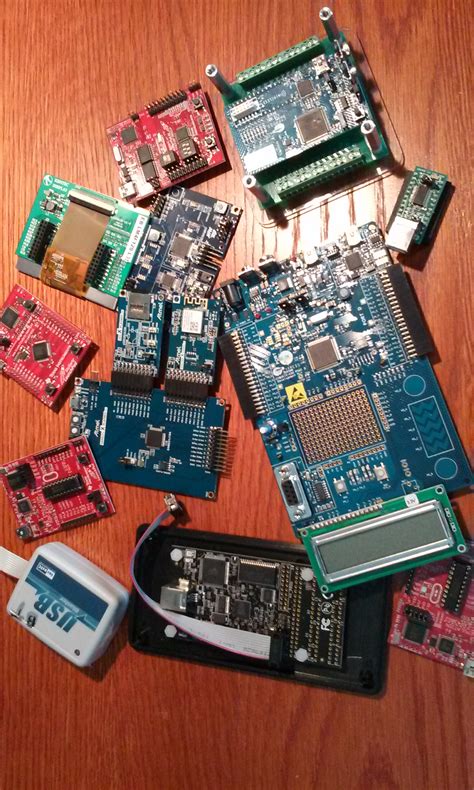
The initial investment in hardware can be substantial. If you’re looking to invest in high-end mining equipment, an FPGA may be a more viable option due to its lower upfront costs and lower power consumption.
- Upgradability: ASICs are typically designed to be upgraded with new hardware components over time, allowing you to take advantage of advances in technology without having to replace the entire system.
The Verdict
In conclusion, while both ASICs and FPGAs can be used for cryptocurrency mining, they serve different needs. ASICs are well-suited for tasks that require large amounts of computational power, such as proof-of-work consensus algorithms, while FPGAs offer flexibility and programmability, making them a better choice for newer cryptocurrencies or applications where adaptability is essential.
When deciding between an ASIC and an FPGA for mining, consider the specific requirements of your cryptocurrency or application. It’s also essential to research and evaluate the costs associated with each option before making an informed decision.

![Bitcoin: EVM Key derivation [closed]](https://aclclasses.com/wp-content/uploads/2025/02/f481754a.png)